Email:
contact@gsbiomats.com 
PEF, polyethylene furanoate, has been of interest as a biobased alternative for PET for many years. Recently, the so far mostly on labscale produced material has gained quite some momentum. Last year, we hosted the first PEF World Congress and one of the biggest players in the field was Zhongke Guosheng Technology (GS Biomats), based in Hangzhou, China. Renewable Carbon Plastics sat down with CEO and Co-founder John Zhang.
1.Hello John, thank you for taking the time to talk to us – for those of our readers that might not know you yet, could you please tell us a little bit about yourself?
Thank you to Renewable Carbon Plastics for the invitation. I'm John Zhang, Co-founder and CEO of GS Biomats. I have dedicated to the innovative development and commercialization of green materials for nearly two decades. In 2021, I launched GS Biomats with my co-founder in Hangzhou, China. We're a pioneer in furan-based biobased materials, particularly the large-scale production and diversified applications of FDCA. I'm so glad to be here to connect with like-minded partners around the world.
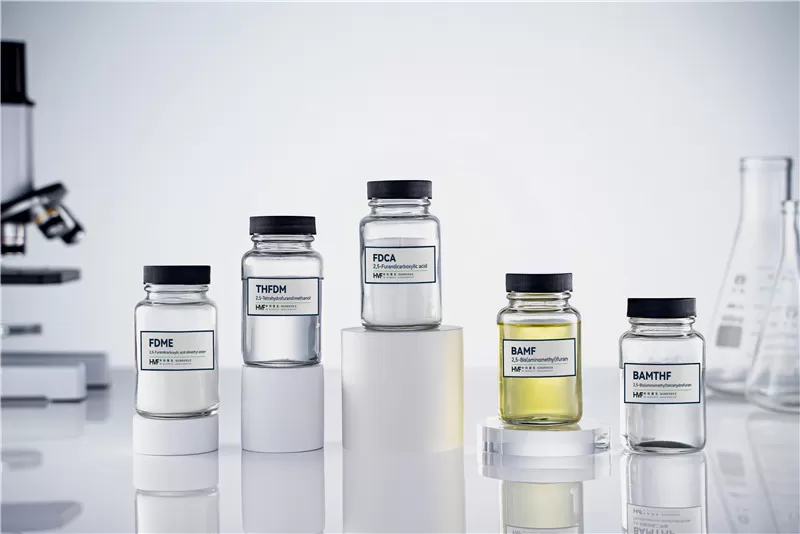
2. Now, PEF is still a fairly new material, one challenge in the past has been the furan-based precursors, FDCA and HMF. What technical breakthroughs were most critical to enabling industrial-scale HMF production?
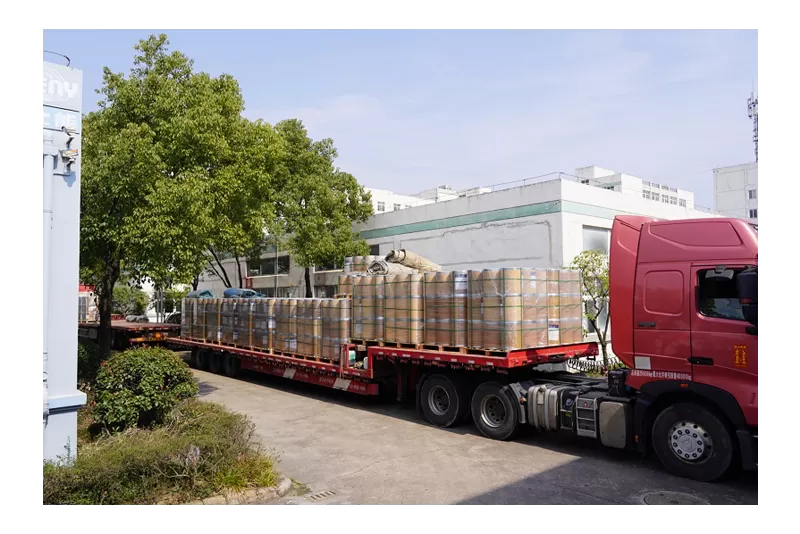
The key is a continuous, tightly controlled process for industrial-scale production. Traditional batch methods suffer from low catalytic efficiency, high impurity levels, and poor batch consistency, keeping costs prohibitively high. For GS Biomats, we've developed our own patented continuous process capable of producing 400 tons of FDCA annually and have delivered over 200 tons worldwide, achieving true commercial deployment.
3. Your company has developed a continuous fixed-bed HMF production process. What advantages does this offer over traditional batch processes for biobased monomers?
Our proprietary continuous process integrates two key technologies, the one is high-selectivity HMF catalysis, which is designed to convert biomass into HMF, with fewer by-products, lower energy consumption, and tighter batch control. And the other is our FDCA Short-Process Technology, which can transform HMF into 99.99% pure FDCA. This breakthrough boosts overall yields, cuts costs, and delivers highly consistent FDCA to downstream partners.
4. What do you see as the biggest opportunities but also challenges for and HMF, FDCA, and ultimately PEF?
We firmly believe that biobased materials represent the future, and furan-based materials offer both "platform potential" and enhanced performance. Beyond synthesizing PEF polyester from HMF and FDCA, they can give rise to a range of high-performance products—specialty aramid fibers, coatings, adhesives, and more. More importantly, PEF fits well into the requirements of climate-friendly and circular solutions.
However, how to reduce the cost and boost supply-chain collaboration are urgent priorities. Without scale, costs can't come down, and without downstream validation, markets won't form. For GS Biomats, we focus on cost reduction through technology and co-creation of applications with end-brands to drive commercialization together.

5. How ready are GS Biotech's materials for integration into mainstream plastics manufacturing processes like injection moulding, stretch blow moulding or extrusion?
We have successfully adapted PEF materials for multiple processing methods, including injection molding, extrusion, and blow molding—especially for high-barrier and thick-wall transparent packaging. Thanks to the structural similarity between FDCA and PTA, most downstream equipment requires little to no major modification.
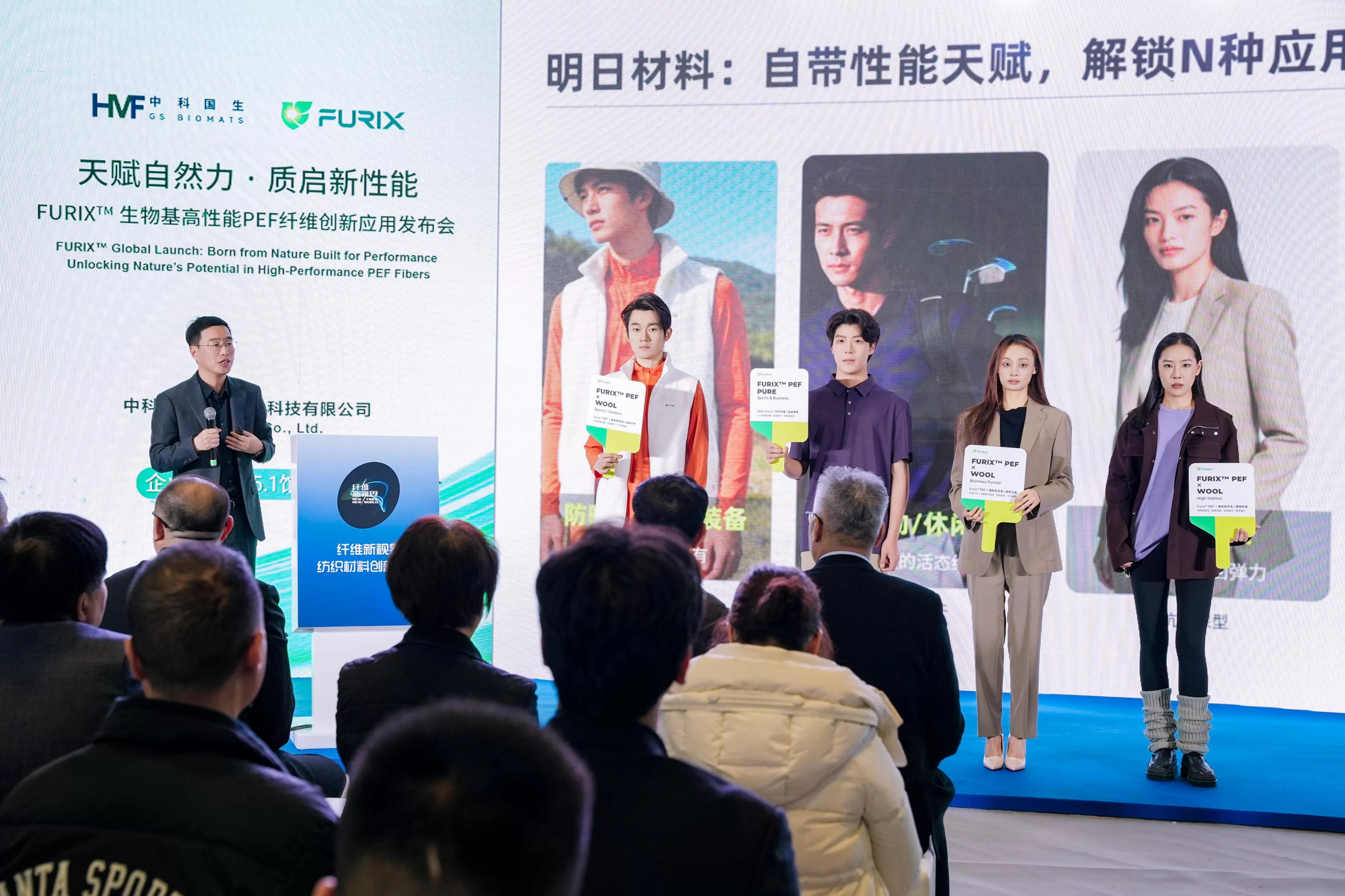
On the fiber side, we've completed validation of PEF filament and staple fibers and are now testing blends with cotton, wool, and silk to meet various functional and differentiated market needs.
6. Which sectors – packaging, textiles, automotive (or other) – are showing the strongest interest in your materials?
Packaging, textiles, and functional protection areas show stronger interest in our materials. For packaging industry, PEF's outstanding barrier properties and recyclability make it ideal for high-barrier and thick-wall transparent packaging. In textiles, PEF fibers naturally deliver antimicrobial and anti-mite properties, rapid moisture wicking, wrinkle resistance, and superb dye uptake—so much so that we've already partnered with leading sportswear and home-textile brands.
Our bio-based FR aramid matches petro-aramid's core performance while improving dye uptake, moisture regain, and elongation at break. The softer, more comfortable fabric delivers differentiated solutions for technical apparel and military/police protective markets. FDCA is also demonstrating strong potential in coatings and adhesives, and we are actively collaborating with industry partners on validation and application.
7. As using pure PEF might be rather expensive in the current economy of scale. Are there specific polymer blends or applications where you believe furan-based materials can outperform traditional plastics?
Absolutely. Rather than using PEF in its pure form, we focus on its value in functional blends to fast-track furan materials into existing supply chains. A prime example is our thick- wall, high-transparency PET cosmetic bottles: by incorporating a small amount of FDCA, we eliminate haze, boost barrier performance, and allow for co-recycling with PET—rapidly accessing high-value markets.
8. What do you believe are the biggest misconceptions that traditional plastic manufacturers have about biobased polymers, and PEF specifically?
Two main misconceptions persist: that "eco-friendly" equates to inferior performance, and that modifying and substituting green materials is prohibitively complex. But through rigorous testing and co creation with customers, we've shown that PEF not only meets environmental goals but surpasses PET in gas barrier, thermal stability, and mechanical strength, all while fitting existing production and recycling systems. The key is turning "potential" into "reality" through technology and application validation.
9. Your team recently raised ¥100 million in pre-A funding. What are your top priorities for deployment of that capital?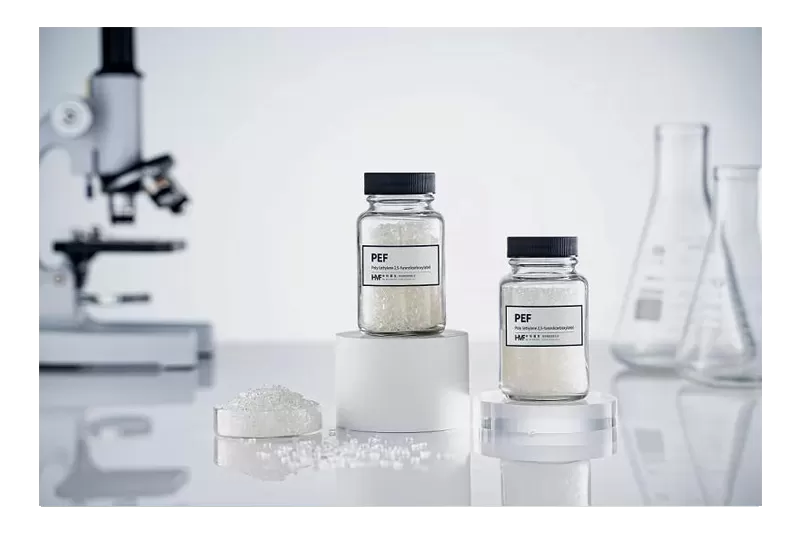
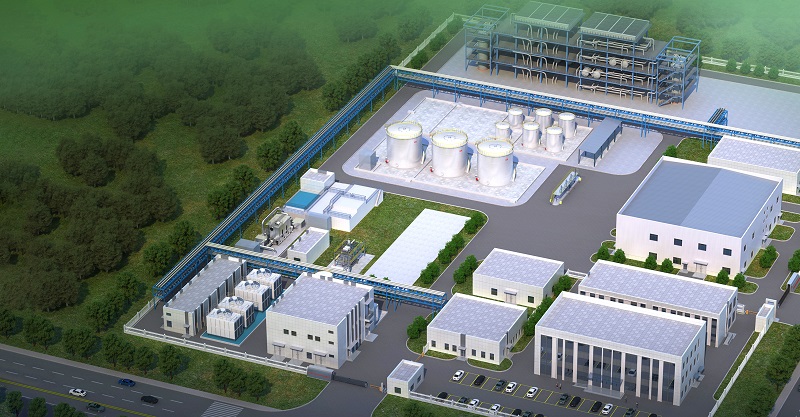
We will expand capacity by constructing a 10,000 ton scale HMF/FDCA demonstration line; continue R&D to improve catalytic efficiency, reduce costs, and advance green processes; accelerate industry validation by deepening collaborations in key areas such as packaging, fibers, specialty fibers, and coatings; and strengthen international compliance by establishing comprehensive global regulatory frameworks for furan materials to access high standard markets.
10. What's your vision for GS Biomats in the next 3–5 years – are you targeting licensing, direct manufacturing, or joint ventures?
We aim to become the world's premier biobased-materials manufacturer by building our own core monomer production facilities and co-creating downstream ecosystems with partners—delivering high-performance, multifunctional, and sustainable furan-based solutions globally. Simultaneously, we'll accelerate our international expansion—with region- and application-specific strategies—through diverse models such as patent licensing and joint ventures.
11. China has rapidly advanced in biobased technologies. What unique advantages or challenges do you face operating out of Hangzhou compared to e.g. productions based in Europe or the US?
China is renowned for its comprehensive industrial ecosystem, and Hangzhou—one of its key hubs for innovation and technology—benefits from the policy support, and a complete upstream-to-downstream supply chain within a vast market. Moreover, as the world's largest polyester producer and consumer, China offers an ideal environment for the large-scale adoption of FDCA. While we've encountered challenges in our globalization efforts, we remain eager to forge deeper partnerships with global brands and co build new opportunities.
12. You've been working in biomass and furan chemistry for nearly two decades. What initially drew you to this field?
From research to entrepreneurship, I've always believed that materials transform the world and that their foundational structure sets the limits of performance. I consider FDCA a true game-changer in this regard.
13. How do you balance your role as a scientist, entrepreneur, and public advocate for sustainable plastics?
These three roles aren't in conflict—in fact, my research training drives a focus on breakthroughs and innovation, my entrepreneurial spirit turns theory into products, and my commitment to sustainability keeps us constantly investing in cutting-edge technological pathways.
14. What advice would you offer to young polymer scientists or entrepreneurs looking to innovate in this space?
Speed isn't the only measure of success, but the direction must be precise. My greatest realization is that whether as a scientist or an entrepreneur, one must both master the technology and understand the market.
15. Last but not least, next to the PEF, furan-based chemistry, and work in general, what moves and excites you in your private life?
I love playing soccer. It perfectly mirrors collaborative innovation in the materials industry: only through seamless coordination and clear strategy can you score.
If there are any areas I might have missed, or on which you would like to go broader and share a bit more – please feel free to add those the questions presented.
Thank you for your time and effort!
1. We noticed that GS Biomats has recently completed several key FDCA-related compliance initiatives—including EU REACH registration, a full Life Cycle Assessment (LCA), and routine new chemical substance registration in China. Could you discuss the strategic significance of these certifications in advancing the commercialization of FDCA and PEF?
Indeed, wee have now secured full REACH registration, demonstrating European regulators' confidence in FDCA's safety. LCA results show that, at ton-scale production, our FDCA cuts carbon emissions by over 24% versus fossil-based PTA. They are all essential steps toward the global commercialization of our biobased materials.
In a market increasingly driven by ESG metrics and ISO 20400, third-party certifications remain one of the most objective ways to validate product quality and earn the trust of downstream partners and global brands.
2. In the commercialization of FDCA, what type of ecosystem collaboration do you think the industry needs?
FDCA is not just a material, but a value chain that drives industry transformation, requiring collaboration across the entire ecosystem.GS Biomats embraces an open and cooperative approach, and is committed to working with research institutions, brands, and capital forces to build platforms nd accelerate the industry's deployment.